
31°C, New York


Notification products, updates
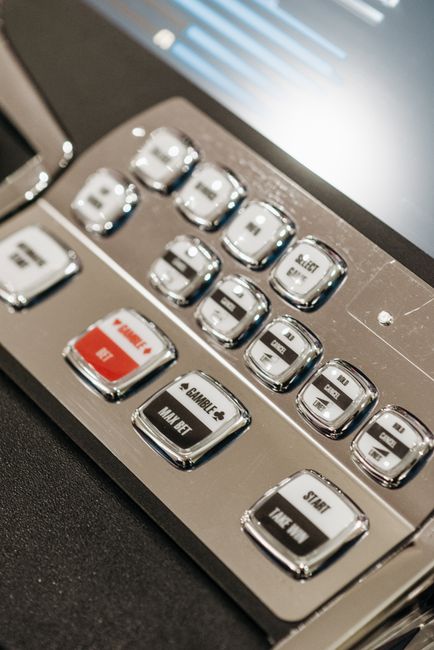
Every slot player has felt it: the stomach-dropping spin where three scatters tease you, then settle one reel short. The machine doesn't care. It never did. And once you understand why — really understand the math humming behind the glass — you stop chasing phantom patterns and start playing smarter. That's not a buzzkill. It's the beginning of getting genuine value out of casino play, whether you're spinning reels, bluffing a river, or sweating a five-leg accumulator on a Sunday afternoon.
Modern online slots don't have a wheel or a physical reel stopping where it stops. They have a Random Number Generator — a piece of software cycling through thousands of numerical outcomes every millisecond. When you hit spin, it freezes on one result, and that result maps to the symbols you see. Crucially, the outcome is decided before the animation plays. Those near-misses designed to spike your heart rate? Pure theater bolted on after the math is already done. It is also worth checking สล็อต before deciding.
This matters because it kills every folk theory in the book. The machine isn't "due." It isn't hot because someone just won big at the next station. It has no memory of your last 200 spins. Each spin is independent, with the same probability distribution every single time. The 94–97% Return to Player (RTP) figure you see quoted is calculated over millions of spins — not over your session, not over your evening, not over your lifetime.
A concrete example: a slot with 96% RTP and medium volatility will, over ten million simulated spins, pay back roughly 9.6 million units for every 10 million wagered. But over 500 spins — a typical bankroll-draining session — your actual result might swing anywhere from +300% to −100% of your stake. The RTP is real. It just lives on a timescale you'll never personally experience.
RTP tells you the long-run average. Volatility tells you how bumpy the ride is. Most casual players ignore it completely, then wonder why a 96% RTP slot ate their bankroll in twenty minutes.
A slot with 96.5% RTP and extreme volatility has a wildly different feel than one with 96.5% RTP and low volatility — and yet the headline number is identical. Choose volatility based on your bankroll size and patience, not the RTP percentage alone. If you're depositing $50, a 10,000x-max-win high-volatility beast is probably the wrong tool.
Here's the uncomfortable truth casino operators don't advertise: slots, roulette, and most table games are negative-EV by design. Poker is different — you're not playing the house, you're playing other humans, and the house just takes a rake. That distinction changes everything.
Consider a $1/$2 no-limit hold'em cash game with a standard 10% rake capped at $5. A genuinely skilled player with a 6–8 BB/100 win rate can clear a modest but real profit over thousands of hands, even after the rake. A weak player with a 10 BB/100 loss rate will hemorrhage. Online, you might play 400 hands an hour across four tables; live, maybe 30 hands an hour. That freezes the skill edge differently depending on where you play.
Key variables that separate profitable players from losers:
Poker is also the only game in the casino where a break-even player has positive expected value via rakeback, bonuses, and loyalty programs. Those add up fast when you're grinding volume.
Most people lose not because of variance, but because they lack a framework for managing it. So here's one that works across disciplines.
The through-line: never let a single bad night end your ability to play tomorrow. Discipline beats guessing, every time.
Welcome bonuses, free spins, reload offers — they all come with wagering requirements. Read the terms before you accept anything. A $100 bonus with a 35x wagering requirement means you must stake $3,500 in qualifying play (often on lower-contributing games) before any of it becomes cashable. Some slots contribute 100%; a few contribute 10% or even nothing.
Three things that silently kill bonus value:
The best bonuses aren't always the biggest numbers. A 25x wagering bonus on slots cleanly beats a 60x bonus with restrictive weighting every single time.
Regulated casino games are entertainment products with a mathematically baked-in edge for the house. That's not defeatism; it's clarity. Players who internalize it stop playing to win and start playing to get value — from the experience, from the bonus, from the skill edge in poker, from the fun of a well-priced bet. Players who resist it treat every session as a doomed campaign against an adversary that cannot lose.
The smart play is straightforward. Know the RTP. Understand volatility. Choose poker when you want skill to matter. Cap losses before you spin a single reel. Read every term sheet. And never, under any circumstances, believe a machine is due.

Beck Shelter shares practical, down-to-earth guidance on bushcraft and outdoor shelter skills for readers across the UK.
Stay Tuned With Updates


Leave A Comment